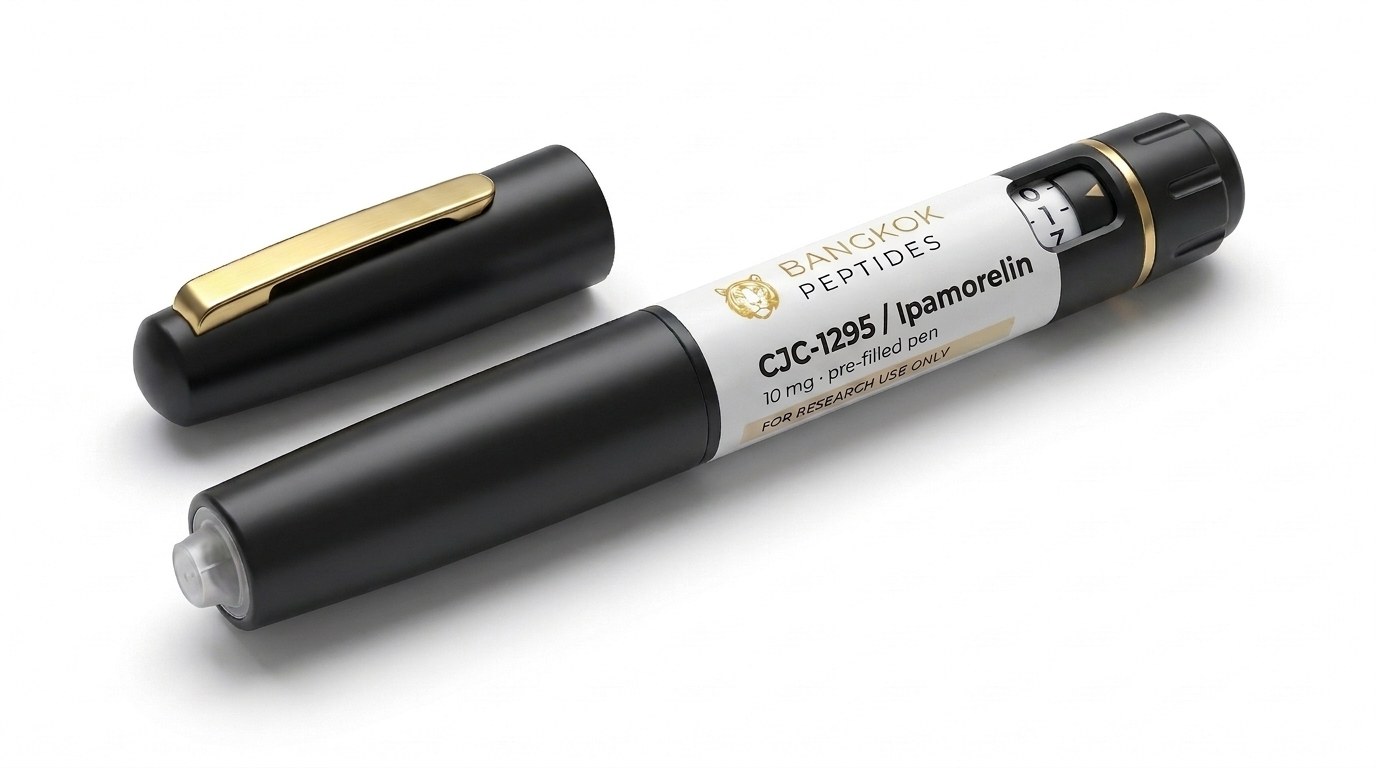
CJC-1295/ipamorelin pen research
CJC-1295 (no DAC) / Ipamorelin 10mg Pen carries a combined research name. The 2014 ipamorelin clinical trial, however, studied ipamorelin in adults undergoing bowel resection. Its multicentre, double-blind, placebo-controlled design addressed a postoperative question, not the performance of this two-component pen. Ipamorelin postoperative trial.
The key endpoint was time to tolerance of a standardized solid meal. The trial found no significant differences from placebo in its key or secondary efficacy analyses. Ipamorelin postoperative trial.
CJC-1295 with and without DAC
FDA's December 2024 briefing identifies CJC-1295 without DAC as a synthetic 29-amino-acid growth hormone-releasing-hormone analogue. It also says that the pharmacology of CJC-1295 DAC cannot be extrapolated to the substance without DAC. The pen's no-DAC wording therefore changes which source findings can describe the named CJC component. FDA CJC-1295 assessment.
The briefing describes covalent albumin binding by the DAC modification. It does not supply a finding about this pen, a component ratio or the effects of combining its two names. FDA CJC-1295 assessment.
Ipamorelin acetate safety concerns
For ipamorelin acetate, FDA identifies unnatural amino acids as an additional material-characterization challenge. The salt form is part of that warning's identity. An ipamorelin catalogue name alone does not prove that this pen contains the acetate material discussed by FDA. FDA compounding safety communication.
The agency's discussion also separates intravenous gastric-motility research from other injectable routes for which it had not identified safety information. Neither the clinical trial nor the FDA discussion establishes safety for a supplier pen by resemblance to another presentation. FDA compounding safety communication, Ipamorelin postoperative trial.
The separately documented no-DAC/ipamorelin vial provides the closest presentation comparison. For the two named components, see CJC-1295 and ipamorelin.