CJC-1295 with and without DAC
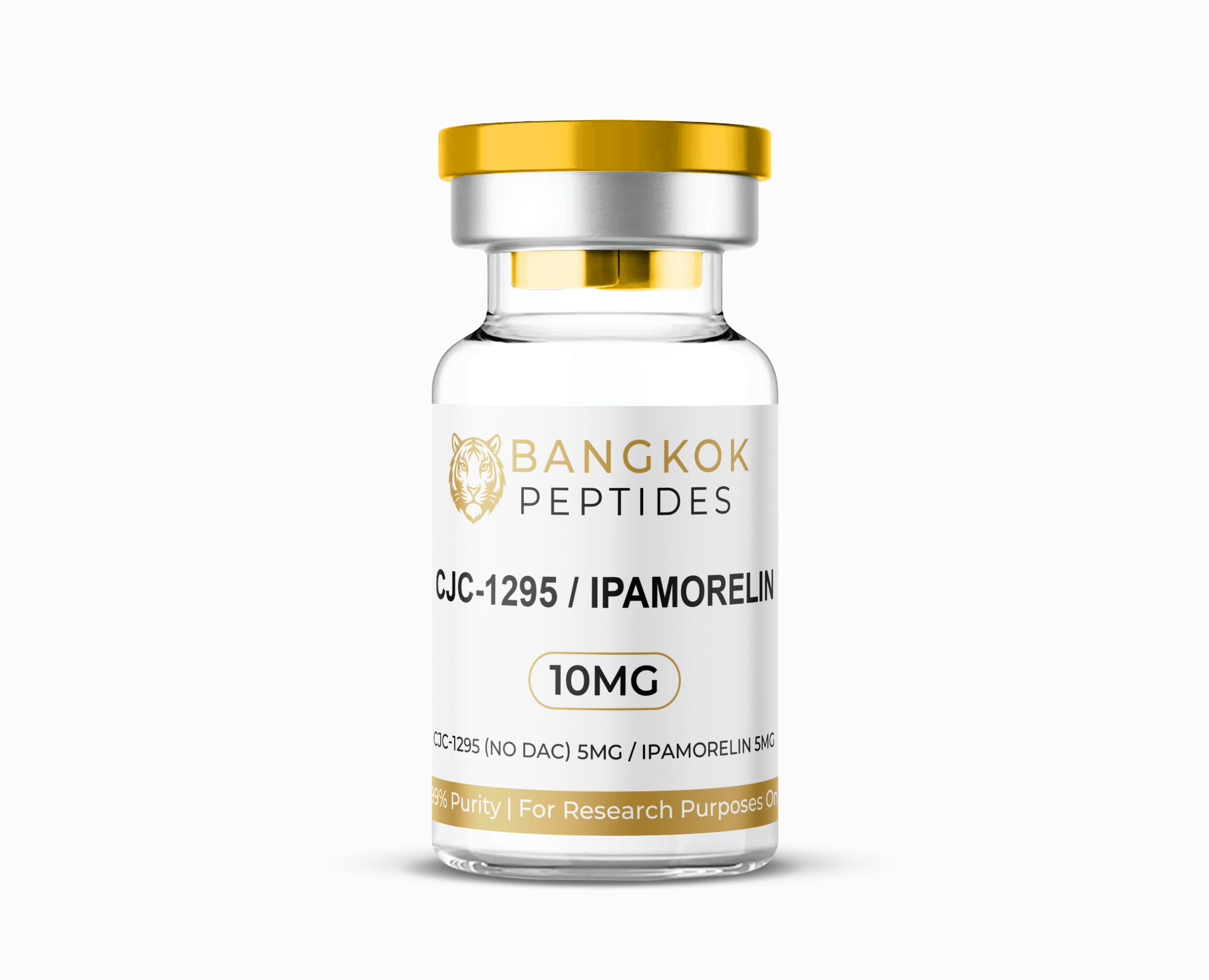
CJC-1295 (no DAC)/Ipamorelin 10MG names two components, and the no-DAC qualification is essential. FDA's December 2024 briefing describes CJC-1295 without DAC as a synthetic 29-amino-acid analogue of growth hormone-releasing hormone. The vial's combined 10MG name does not give an individual amount for each component. FDA CJC-1295 assessment.
The same briefing describes covalent albumin binding associated with the drug-affinity-complex modification in CJC-1295 DAC. It expressly states that DAC pharmacology cannot be extrapolated to CJC-1295 without that modification. A paper using the shorter CJC-1295 name therefore needs a closer identity match before its findings can describe a no-DAC component. FDA CJC-1295 assessment.
Ipamorelin postoperative trial
A 2014 phase 2 study of ipamorelin was a multicentre, double-blind, placebo-controlled trial in adults undergoing bowel resection. Its key efficacy endpoint was the time to tolerance of a standardized solid meal. This was a postoperative gastrointestinal-recovery question, rather than a study of the combined CJC-1295/ipamorelin vial. Ipamorelin postoperative trial.
The investigators found no significant differences from placebo in the key or secondary efficacy analyses. That result belongs to the postoperative-ileus trial and its defined endpoints. It cannot be turned into evidence of a successful effect from this combination, and the separate CJC-1295 description does not change what the ipamorelin trial found. Ipamorelin postoperative trial, FDA CJC-1295 assessment.
Salt forms and route-specific risks
FDA's compounding safety discussion specifically concerns ipamorelin acetate. It identifies unnatural amino acids as an added challenge in characterizing that material. The acetate form named by FDA is not independently verified by the shorter ipamorelin wording in this catalogue. FDA compounding safety communication.
FDA also distinguishes intravenous ipamorelin gastric-motility research from other injectable routes for which it had not identified safety information. A clinical research route is therefore part of the evidence context. It does not establish safety through a different route or validate the named supplier combination. FDA compounding safety communication.
The CJC-1295 guide provides the modification context, while ipamorelin remains a separate component topic. The combined pen is another catalogue presentation, not evidence that the combination has been clinically validated. FDA CJC-1295 assessment.