What is GHK-Cu?
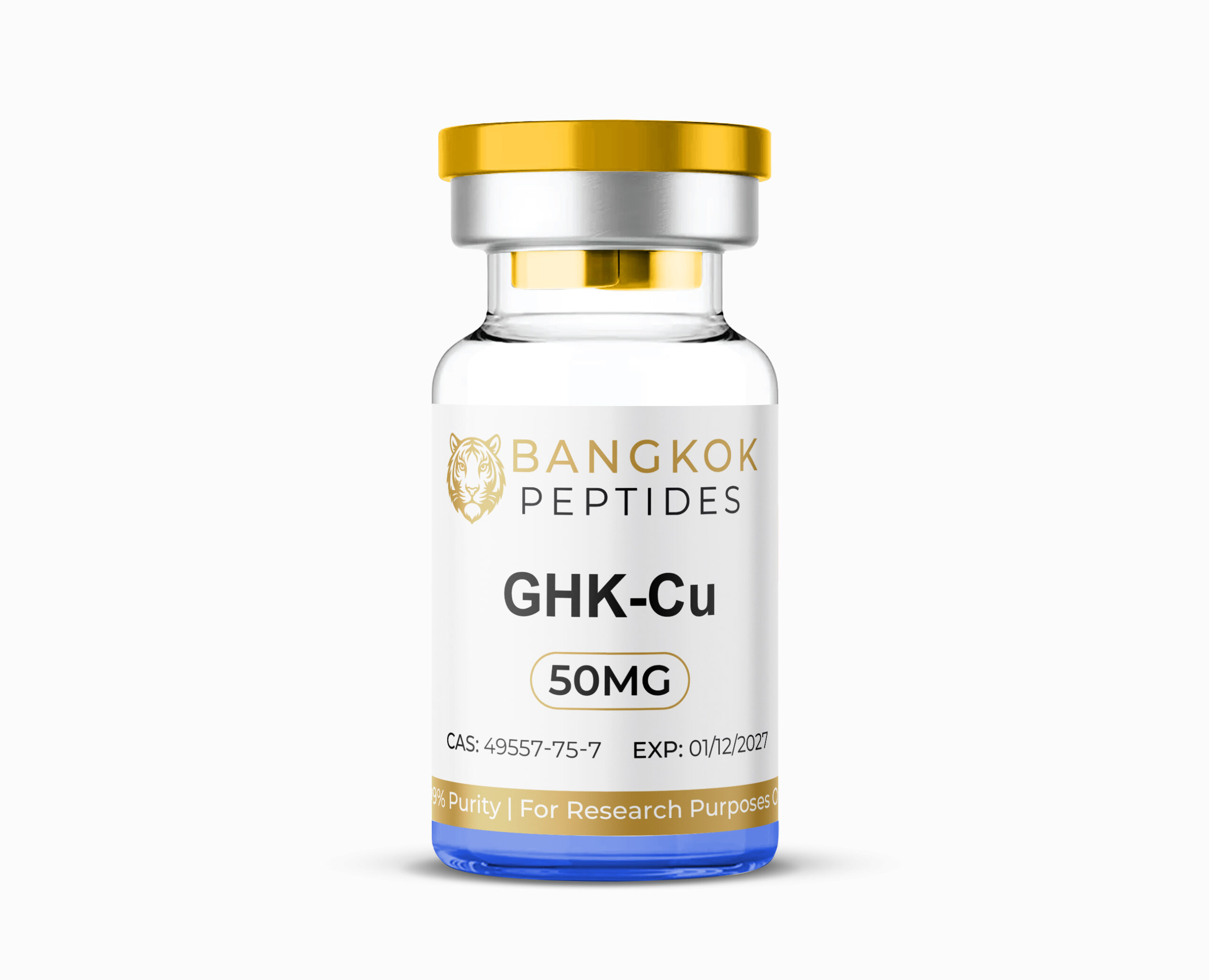
GHK-Cu refers in the 1993 primary study to a copper complex of glycyl-L-histidyl-L-lysine, a three-amino-acid peptide. The copper-complex identity is more precise than the GHK letters alone. The catalogue's GHK-Cu vial is listed with 50mg / 100mg variants, which describe its presentations rather than a clinical result. GHK-Cu rat wound study.
The paper's compound description identifies the material in that research context. It does not independently verify the contents of a supplier vial. The two catalogue amounts also do not state a concentration or an amount to administer. GHK-Cu rat wound study.
The rat wound-chamber study
The 1993 experiment used implanted wound chambers in rats and compared GHK-Cu with saline. It reported increased collagen and glycosaminoglycan content in treated chambers. These are concrete tissue measurements from an animal wound model, not a direct study of this vial in people. GHK-Cu rat wound study.
Increased content within an implanted rat wound chamber is not the same endpoint as human skin appearance or a clinical healing outcome. GHK-Cu rat wound study.
Compounded injectable GHK-Cu risks
FDA's GHK-Cu compounding warning specifically concerns injectable routes. It identifies potential immune-response risks associated with aggregation and peptide-related impurities. FDA compounding safety communication.
The warning and the rat experiment answer different questions. One describes concerns about compounded injectable material; the other reports tissue measurements in a controlled animal model. Combining them does not establish safety or human cosmetic or healing benefits for this supplier presentation. FDA compounding safety communication, GHK-Cu rat wound study.
The GHK-Cu Pen provides a separate 50mg / 100mg presentation comparison. Similar catalogue amounts do not establish equivalence to the vial or the experimental copper complex. GHK-Cu rat wound study.