GHK-Cu wound-study findings
The cited GHK-Cu wound research concerns rats, not a human trial of this pen. The primary 1993 study used implanted wound chambers in rats and reported increased collagen and glycosaminoglycan content. Separately, FDA's GHK-Cu safety warning concerns compounded products for injectable routes. GHK-Cu rat wound study, FDA compounding safety communication.
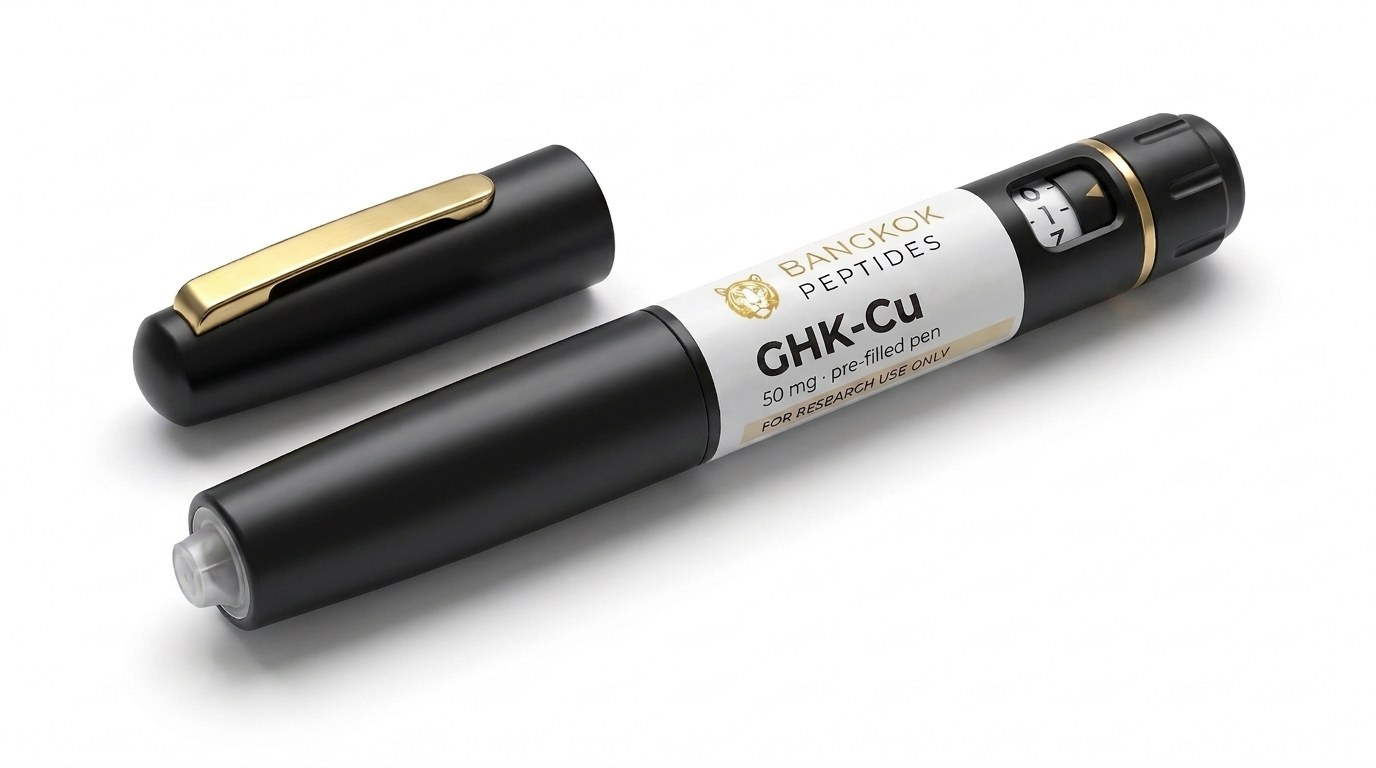
The pen listing shows 50mg / 100mg variants. These are catalogue presentation amounts, not a concentration or an administration instruction. They do not identify the experimental setting or establish equivalence to the material in the rat study. GHK-Cu rat wound study.
Collagen and glycosaminoglycan measurements in rats
Investigators compared the copper-peptide complex with saline in the implanted rat chambers. The measured collagen and glycosaminoglycan content supplies a specific answer about that animal model. It does not measure how human skin looks after use of a supplier pen. GHK-Cu rat wound study.
The paper identifies GHK-Cu as a copper complex of glycyl-L-histidyl-L-lysine. That copper complex was studied in implanted rat wound chambers; the finding does not establish equivalence to a related peptide, a different route or this supplier presentation. GHK-Cu rat wound study.
Compounded injectable GHK-Cu warnings
FDA identifies potential immune-response risks linked to aggregation and peptide-related impurities in compounded injectable GHK-Cu. The concern is route-specific. It is not a blanket statement about every topical formulation, and the animal tissue finding does not establish safety for the pen. FDA compounding safety communication, GHK-Cu rat wound study.
It is equally inaccurate to read the warning as proof that this particular supplier item has an impurity or caused an adverse event. The communication addresses risks associated with the described compounded injectable context. Supplier identity and the source's safety assessment remain separate. FDA compounding safety communication.
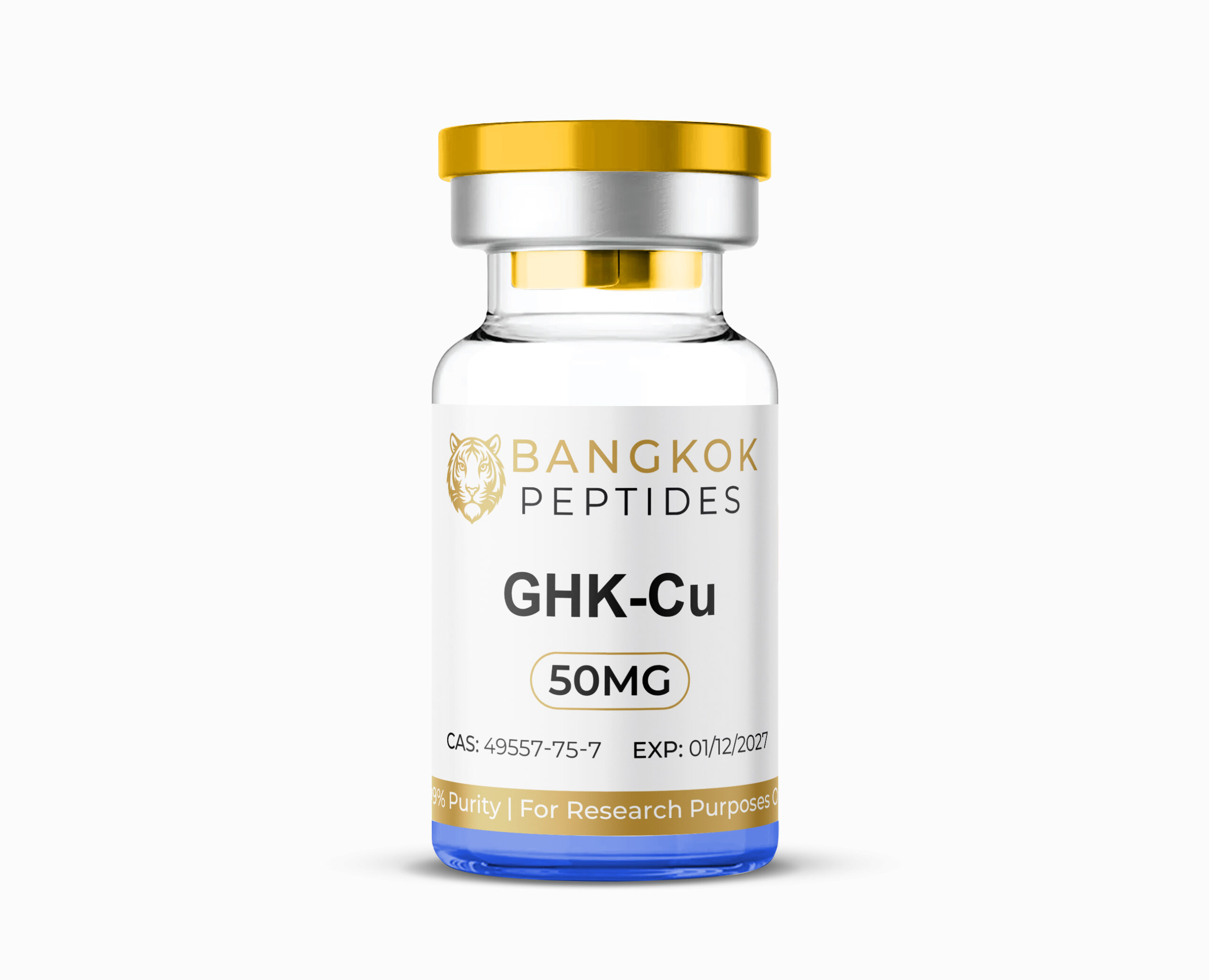
The separately listed GHK-Cu vial also has 50mg / 100mg variants. These are nominal catalogue amounts, without demonstrating matching formulation or biological performance.