What is MOTS-c?
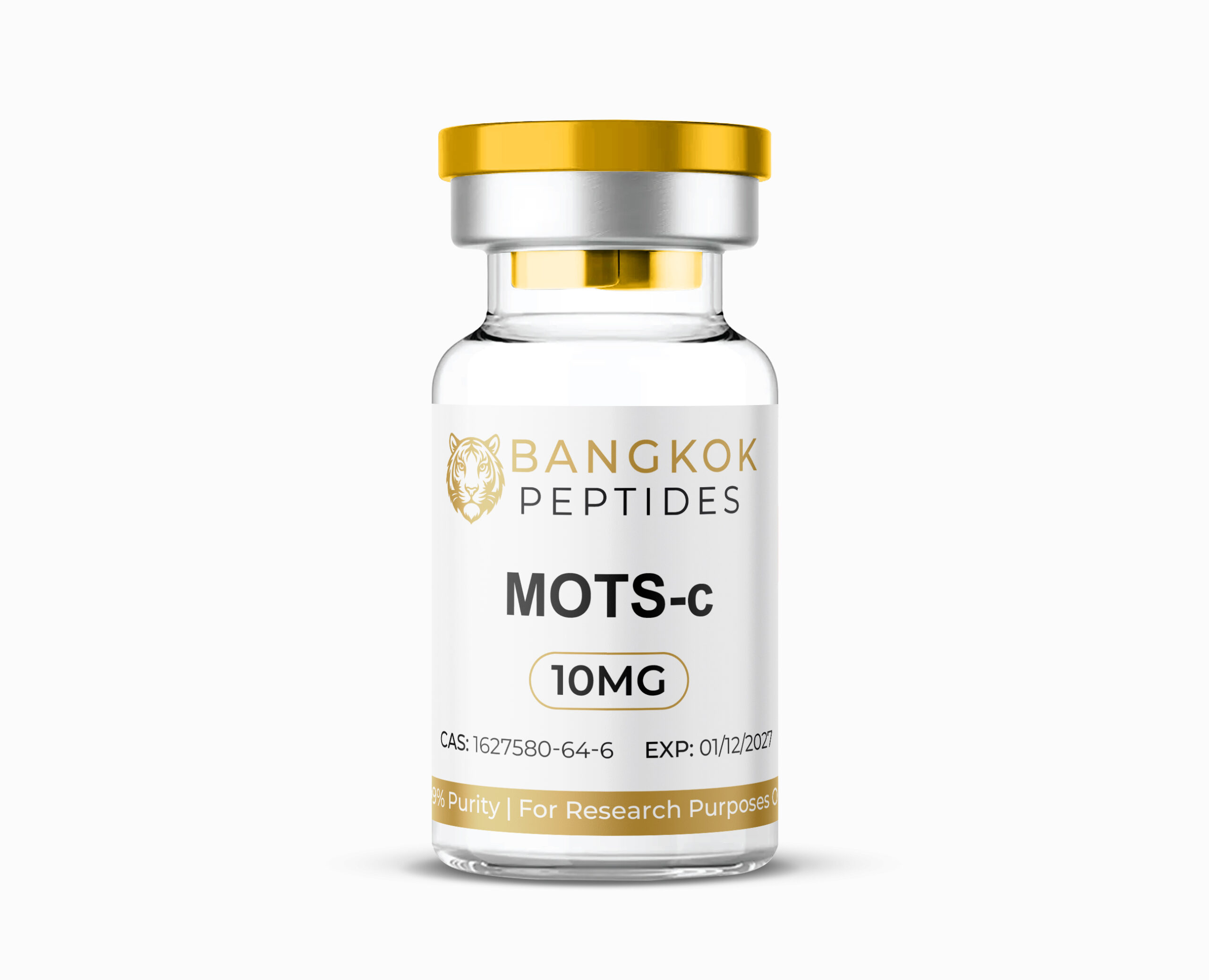
MOTS-C is listed as a vial with 10mg / 20mg / 40mg variants. In FDA's July 2026 briefing, MOTS-c is a 16-amino-acid peptide, and the reviewed material is described as a synthetic version of a mitochondria-derived peptide. Biological origin and a manufactured research material are therefore distinct descriptions. FDA MOTS-c assessment.
The 2015 primary paper identified a short open reading frame within mitochondrial 12S ribosomal RNA encoding the peptide. That is a specific finding about the peptide's biological origin. It is not authentication of a vial whose catalogue name refers to MOTS-c. MOTS-c primary study.
Cell and mouse metabolic findings
The 2015 paper linked MOTS-c's cellular metabolic actions to AMPK activation. This supplies a named cellular signaling context for the research. The cell result should remain a cellular result rather than being rewritten as a demonstrated metabolic benefit in people. MOTS-c primary study.
In a treatment experiment, the paper reported prevention of diet-induced insulin resistance in mice. It is an animal intervention result, distinct from identifying an endogenous peptide or measuring its biological origin. MOTS-c primary study.
Together, these observations describe different questions: where the peptide is encoded, what cellular pathway was linked to its actions, and what happened in a mouse treatment experiment. They do not establish human benefit or authenticate the supplier vial. The synthetic material described by FDA likewise does not become verified supplier contents through the shared name. MOTS-c primary study, FDA MOTS-c assessment.
MOTS-c vial and pen presentations
The slash-separated vial amounts are listed variants, not a concentration or a schedule. The separate MOTS-c Pen is listed with 10mg / 40mg variants. The difference in catalogue options is a literal presentation comparison, without establishing matching contents or biological performance.
MOTS-c questions
Does mitochondria-derived mean this vial is the body's own peptide?
FDA describes the material it reviewed as a synthetic version of the mitochondria-derived peptide. That distinction does not verify the supplier vial's composition or establish a human treatment effect. FDA MOTS-c assessment.