MOTS-c metabolic cell and mouse findings
The 2015 MOTS-c treatment experiment reported prevention of diet-induced insulin resistance in mice. It was not a trial of MOTS-c Pen in people. That animal result does not establish a clinical outcome for this supplier presentation. MOTS-c primary study.
The paper also linked cellular metabolic actions to AMPK activation. That is a named cell-level mechanism in the research context. It should not be combined with the mouse result to assert a human benefit that neither experiment establishes. MOTS-c primary study.
Mitochondrial origin and synthetic material
The primary paper identified a short open reading frame within mitochondrial 12S ribosomal RNA encoding MOTS-c. This explains the biological-origin description. It is a different observation from administering material in the mouse experiment. MOTS-c primary study.
FDA's July 2026 briefing describes MOTS-c as a 16-amino-acid peptide and identifies the reviewed material as a synthetic version of the mitochondria-derived peptide. These descriptions separate the biological peptide from a manufactured research material. Neither authenticates the contents or performance of the catalogue pen. FDA MOTS-c assessment.
MOTS-c pen and vial presentations
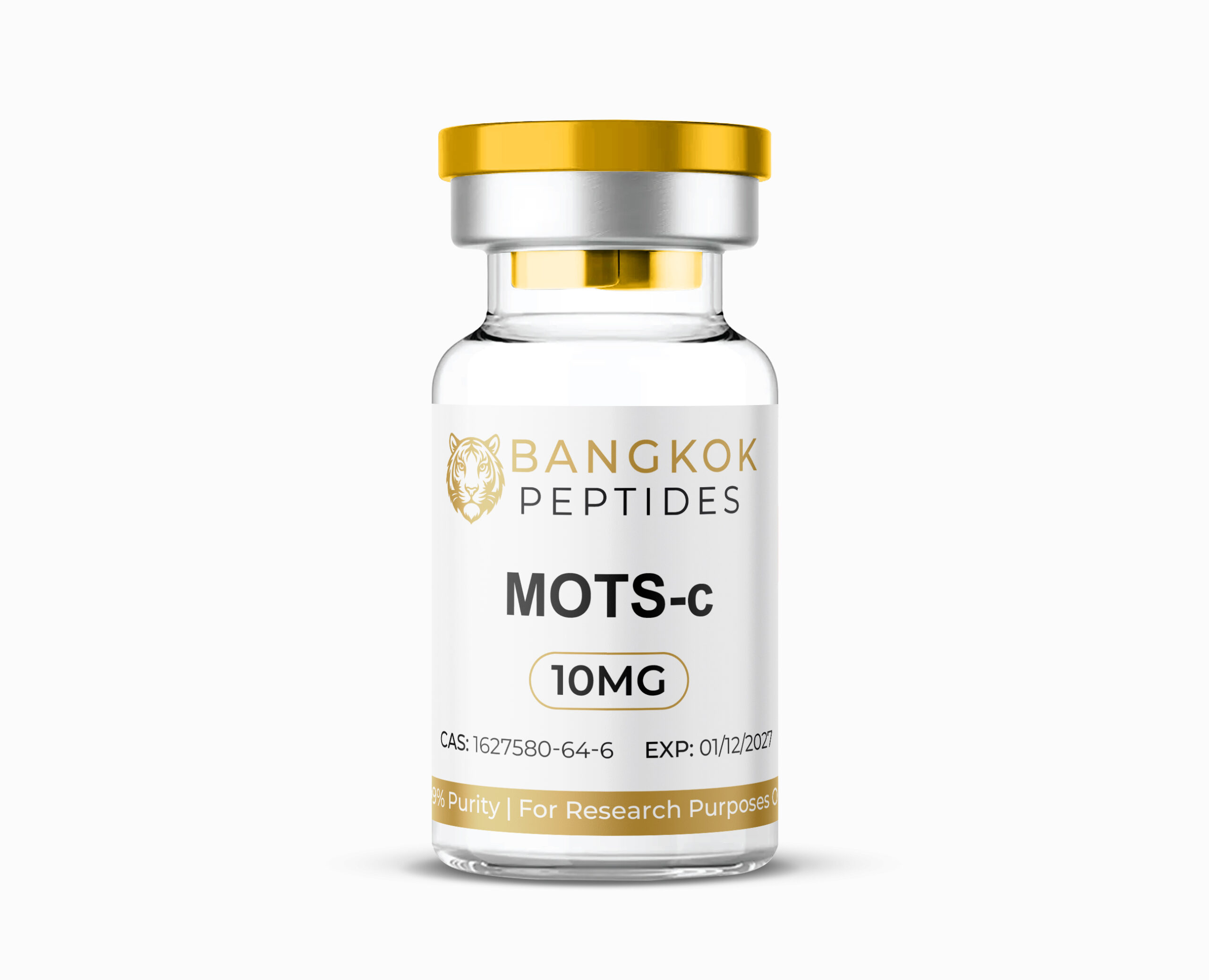
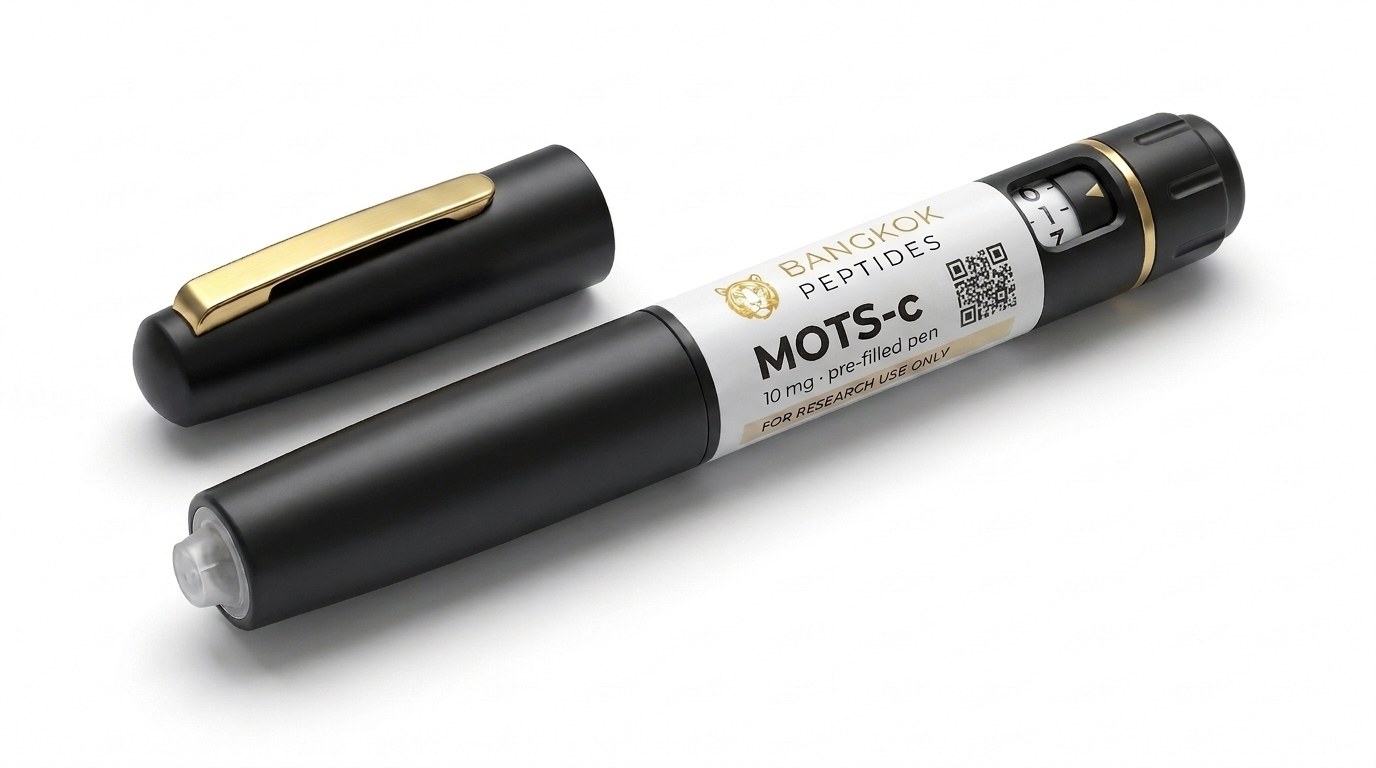
MOTS-c Pen is listed with 10mg / 40mg variants. The separately documented MOTS-C vial has 10mg / 20mg / 40mg variants. Those are differences in the catalogue's amount options, not concentrations or amounts to administer.
The useful research comparison remains anchored to the actual experiment: AMPK-linked cellular actions and a diet-induced-insulin-resistance finding in mice. The pen's name and amount options cannot establish that its formulation matches the research material or reproduces those findings in people. MOTS-c primary study.