Human TB-500 study evidence
FDA's July 2026 TB-500 review did not identify clinical studies administering TB-500 to humans. That dated review does not validate the supplier's TB-500 10mg Pen. It does not establish a recovery benefit for the catalogue product. FDA TB-500 assessment.
The finding belongs to the substance and review date. It should not be softened into a positive clinical claim through a paper about a related protein or differently modified fragment. Those materials have their own identities. FDA TB-500 assessment.
TB-500, LKKTETQ and thymosin beta-4
The FDA evaluation identifies TB-500 as a synthetic seven-amino-acid fragment of thymosin beta-4 and specifies the N-acetylated material. Full-length thymosin beta-4 is the parent reference, rather than another name for the evaluated short fragment. FDA TB-500 assessment.
The briefing separately states that the pharmacological profile of non-acetylated LKKTETQ cannot be directly transferred to N-acetylated TB-500. A similar sequence reference does not remove this boundary. FDA TB-500 assessment.
TB-500 pen versus vial
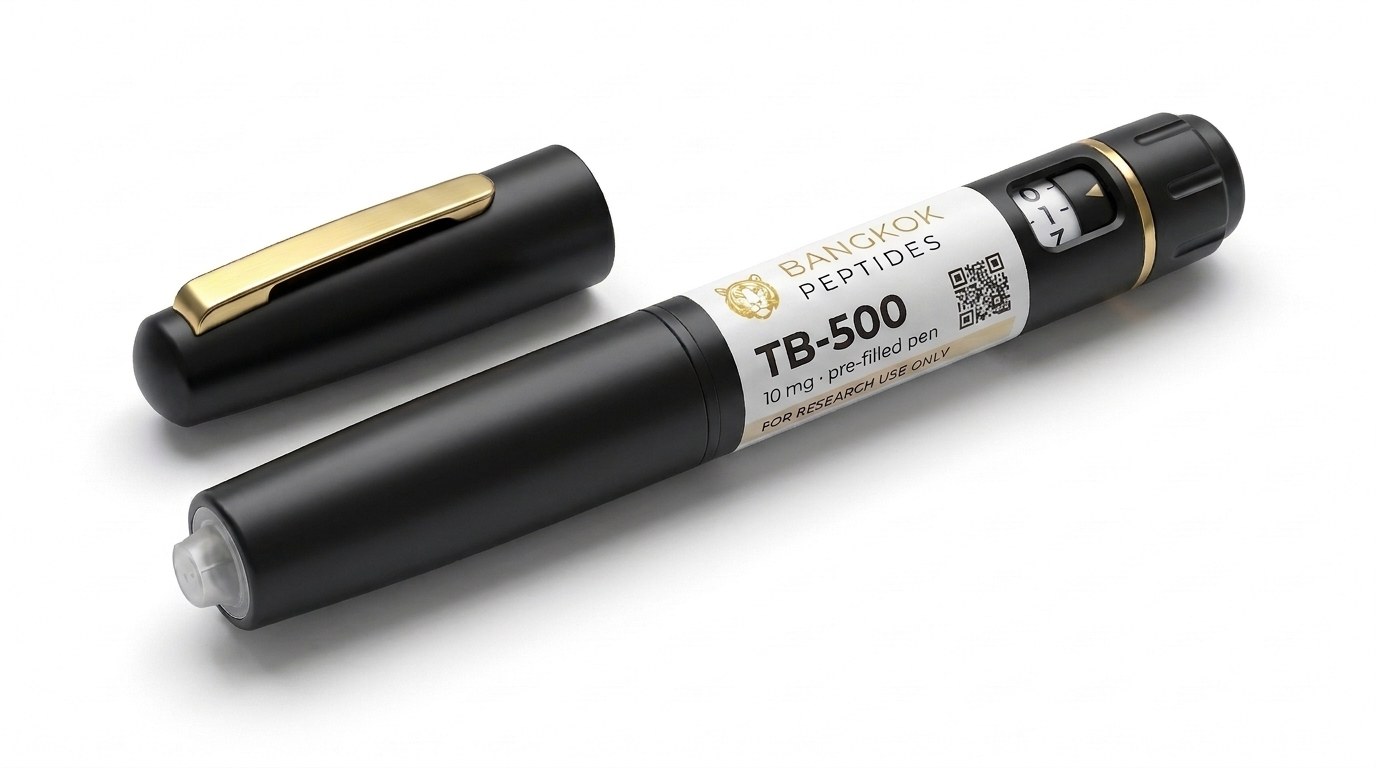
The catalogue lists a pre-filled TB-500 10mg Pen. Its 10mg amount is a presentation field, not a concentration or administration instruction. The name does not independently verify the pen's fragment identity, modification, formulation or performance. FDA TB-500 assessment.
For the parent-protein and fragment topic, see the TB-500 guide. The separately named TB500 10MG vial is the literal format comparison. Neither link makes the two supplier presentations equivalent or transfers a related molecule's pharmacology to them. FDA TB-500 assessment.