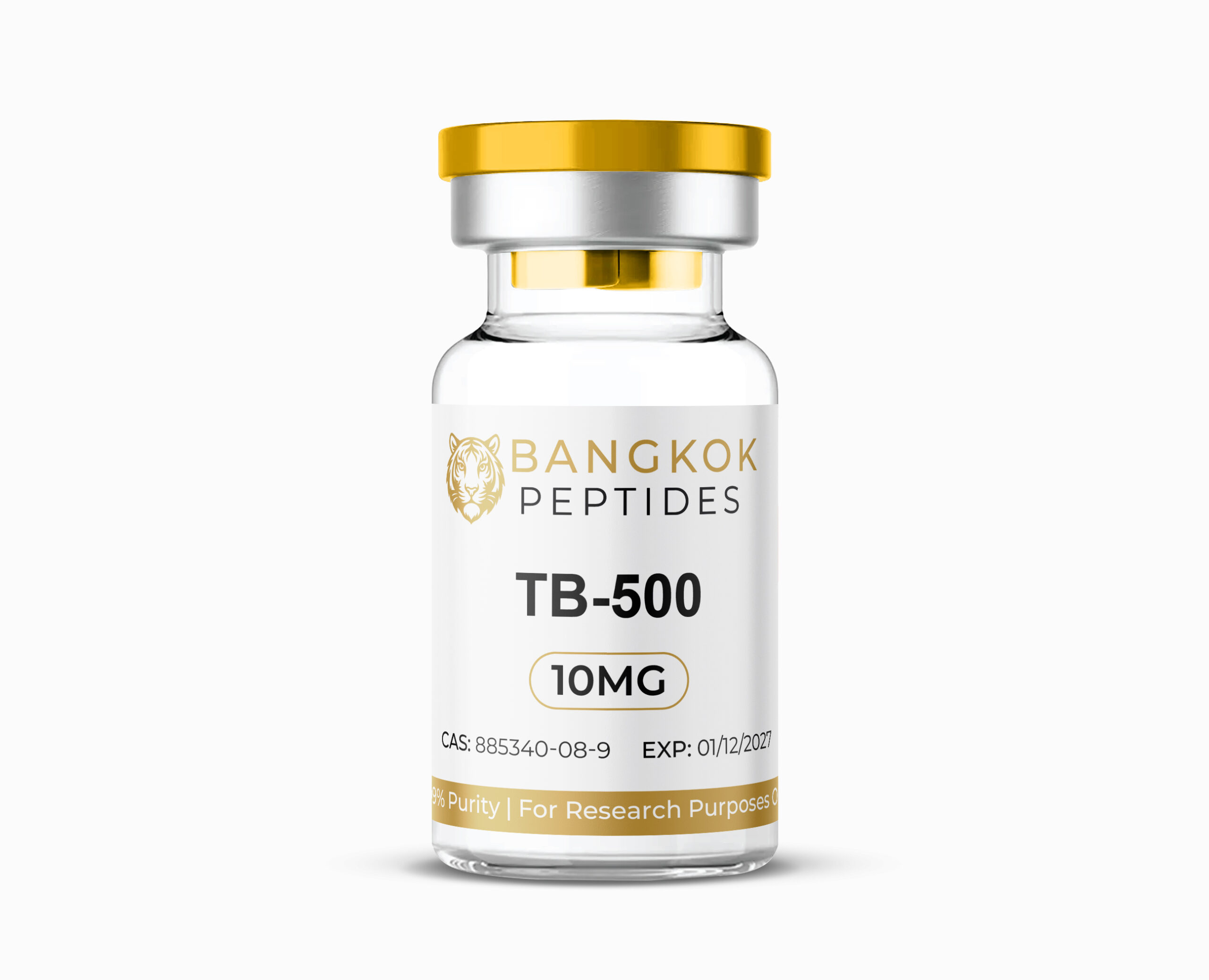
What is TB-500?
FDA's July 2026 evaluation describes TB-500 as a synthetic seven-amino-acid fragment of thymosin beta-4. The evaluated material is N-acetylated. This is more specific than the parent-protein name, and the TB500 10MG vial should not be read as identifying full-length thymosin beta-4. FDA TB-500 assessment.
The same briefing distinguishes the N-acetylated material from non-acetylated LKKTETQ and states that the latter's pharmacological profile cannot be directly transferred to TB-500. FDA TB-500 assessment.
FDA review of human TB-500 studies
In its July 2026 review, FDA did not identify clinical studies of TB-500 administered to humans. This is a dated conclusion from that review, not a claim about every possible future study. It is directly relevant when a recovery claim is presented as though it rests on human TB-500 trials. FDA TB-500 assessment.
Research involving full-length thymosin beta-4 or non-acetylated LKKTETQ cannot fill that gap simply through a related name. The reviewed TB-500 identity and FDA's explicit non-transfer statement need to stay with any account of the evidence. They do not establish a clinical effect for this supplier vial. FDA TB-500 assessment.
TB-500 vial versus pen
The catalogue identifies TB500 10MG as a vial with a 10MG amount. This is not a concentration or a use instruction, and it does not independently verify the fragment, acetylation state or contents. The TB-500 guide gives the broader topic context for that identity distinction. FDA TB-500 assessment.
A separate TB-500 10mg Pen is another presentation. Matching nominal amounts and related names do not establish equivalent formulations or allow findings from one molecule to be assigned to a different material. FDA TB-500 assessment.