Semax gene-expression findings in rats
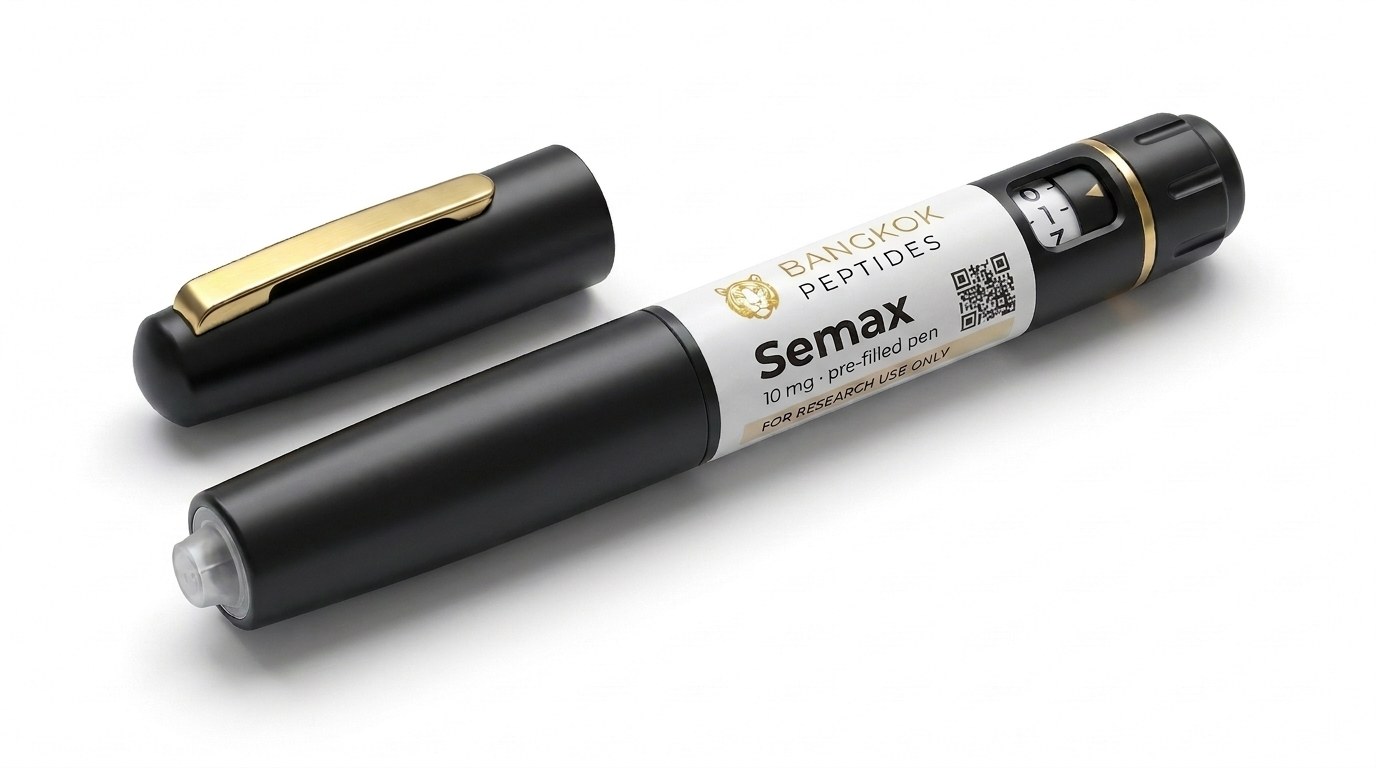
The 2014 Semax paper investigated gene expression in rat brain cortex after experimental focal ischemia. It reported predominantly enhanced expression of immune-system-related genes in that setting. This is the endpoint relevant to Semax 10mg Pen research context, rather than a demonstrated cognitive effect of the pen. Semax rat gene-expression study.
The experiment compared changes at 3 and 24 hours after permanent middle-cerebral-artery occlusion in rats. Semax rat gene-expression study.
The measured subject was gene expression in ischemic rat cortical tissue. It was not healthy-person memory or attention, and the supplier pen was not validated by that finding. The immune-related expression result does not establish human cognitive enhancement or broad immune improvement. Semax rat gene-expression study.
What is Semax?
FDA's July 2026 briefing supplies a separate identity definition: Semax is a synthetic seven-amino-acid analogue of an ACTH fragment. That description identifies the evaluated peptide. It does not turn an analogue into the full ACTH hormone or verify this pen's composition. FDA Semax assessment.
Semax safety and pen formulation
FDA identifies aggregation, peptide impurities and potential immune-response concerns for compounded Semax. That is a material safety discussion, not a purity or safety finding for the particular pen. The catalogue's 10mg amount does not independently answer those product-specific questions. FDA compounding safety communication.
The separate Semax vial has the same nominal 10mg catalogue amount, without that proving equivalent formulation or performance. The Semax topic guide provides the broader research reference; the rat tissue and timing qualifiers stay with the experiment. Semax rat gene-expression study.