What is Semax?
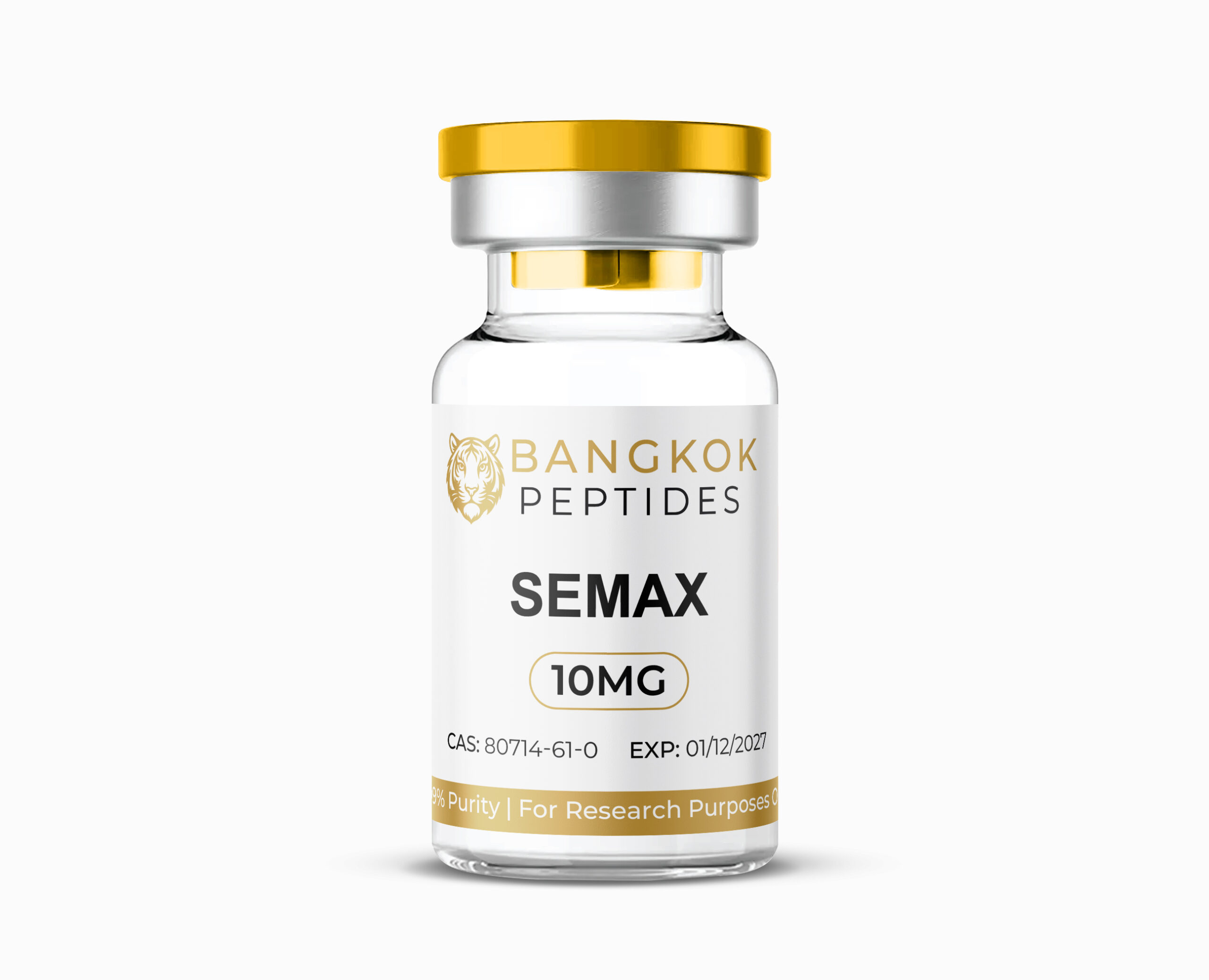
FDA's July 2026 briefing describes Semax as a synthetic seven-amino-acid analogue of a fragment of adrenocorticotropic hormone, or ACTH. It is a definition of the evaluated peptide, rather than a statement that Semax is the complete ACTH hormone. The Semax 10mg vial name is a separate supplier identity. FDA Semax assessment.
The analogue description provides substance context. It does not establish the contents, formulation or clinical effects of a product carrying the Semax name. The vial's listed 10mg amount is not a concentration or a use instruction. FDA Semax assessment.
Gene-expression research after rat focal ischemia
A 2014 primary study analyzed gene expression in rat brain cortex after experimental focal ischemia. It compared changes at 3 and 24 hours after permanent middle-cerebral-artery occlusion. These are specific tissue, model and timing details, rather than a clinical measurement of cognition in healthy people. Semax rat gene-expression study.
The paper reported that Semax predominantly enhanced expression of genes related to the immune system in that rat experiment. A gene-expression result is the endpoint being described. It should not be replaced with a claim of improved human memory, attention or broad immune benefit. Semax rat gene-expression study.
Semax safety concerns
FDA's compounding safety communication identifies aggregation, peptide-related impurities and potential immune-response concerns for compounded Semax. Those are material-related concerns in that communication, distinct from measuring cortical gene expression after experimental ischemia. FDA compounding safety communication, Semax rat gene-expression study.
The Semax guide provides the wider research context, while the separately documented Semax 10mg Pen offers a presentation comparison. Neither a shared name nor the animal gene-expression findings authenticate the vial or establish human enhancement effects. Semax rat gene-expression study.