Selank behavioral research in rats
The 2008 Selank study used open-field and hole-board behavioral assessments in rats and measured brain serotonin and noradrenaline. Its animals were adults that had experienced antenatal hypoxia. For Selank 10mg Pen, these are defined animal-research endpoints, not a human trial of the supplier presentation. Selank rat study.
These behavioral and brain-amine assessments concerned adult rats after antenatal hypoxia. Replacing that setting with a broad statement about adult human attention or anxiety would change the population and outcome described by the paper. Selank rat study.
Selank acetate and safety concerns
The primary paper specifies Selank as the seven-amino-acid sequence Thr-Lys-Pro-Arg-Pro-Gly-Pro. FDA's safety table, separately, uses the identity selank acetate and the additional name TP-7. A sequence description and a salt-specific safety record provide related context, without authenticating the pen's formulation. Selank rat study, FDA compounding safety communication.
FDA identifies aggregation, peptide-related impurities and potential immune-response concerns for compounded selank acetate. Those risks concern compounded selank acetate. The supplier pen's shorter Selank name does not verify that salt form. FDA compounding safety communication.
Selank pen presentation
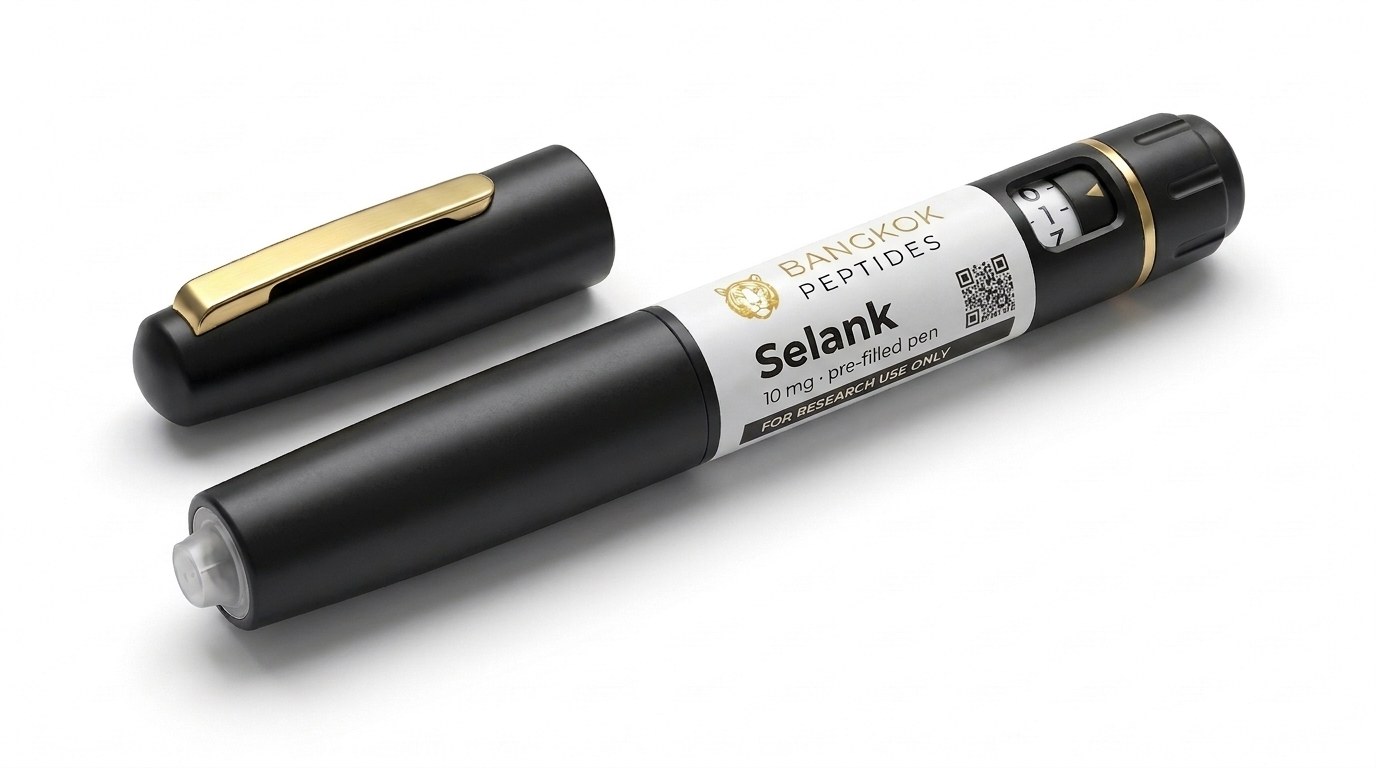
The catalogue identifies a pre-filled Selank 10mg Pen. This is a presentation name and listed amount, rather than a concentration, a clinical instruction or a finding of human neurological benefit. The separately named Selank 10MG vial has its own documented identity.
The rat study's open-field and hole-board tests and brain-amine measurements do not establish human enhancement effects for either presentation. Selank rat study.