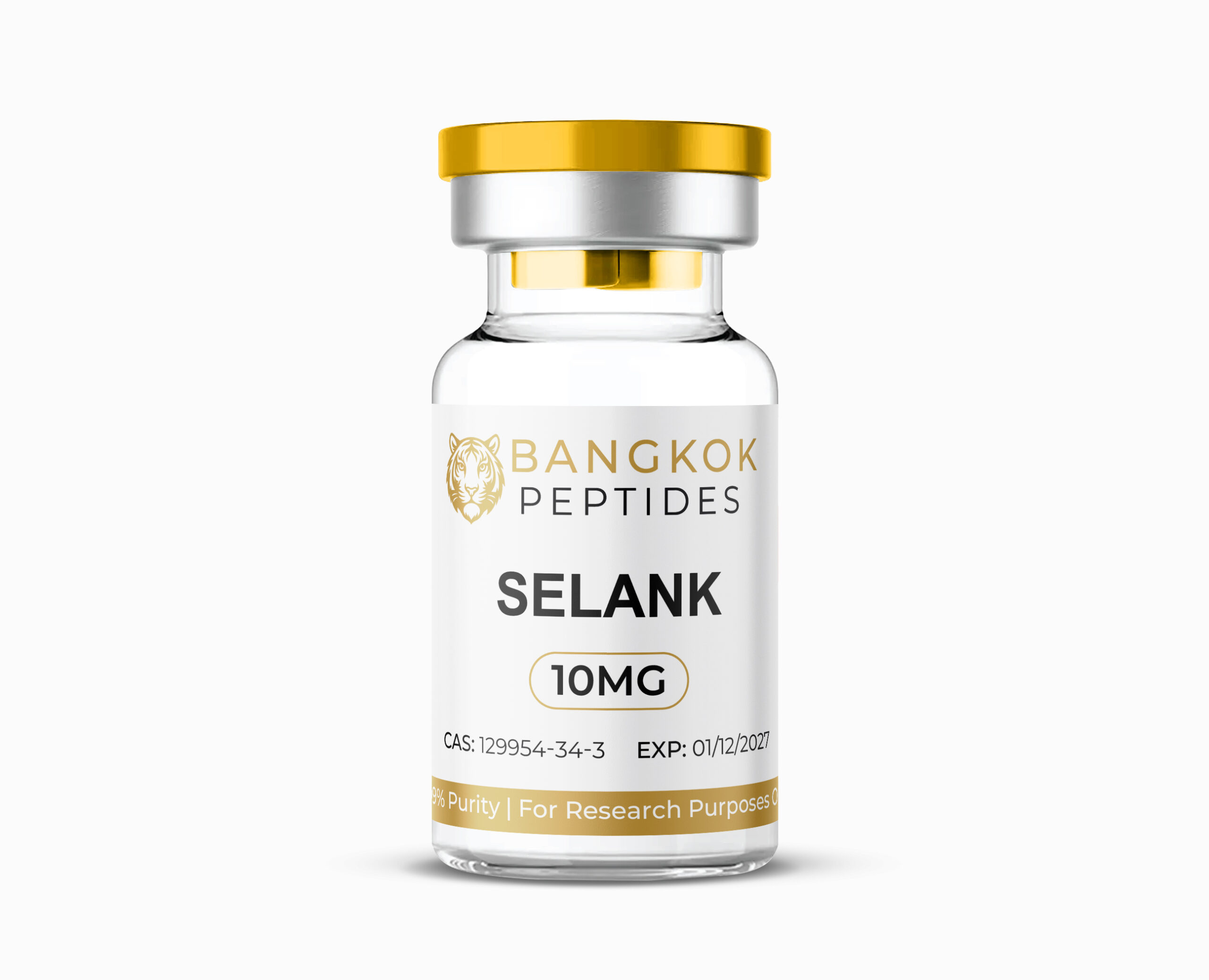
What is Selank?
A 2008 primary study describes Selank using the seven-amino-acid sequence Thr-Lys-Pro-Arg-Pro-Gly-Pro. It examined adult rats that had experienced antenatal hypoxia. The sequence and the animals' prior condition are specific parts of the study, not a demonstration of general neurological benefit in people. Selank rat study.
Selank 10MG is the catalogue's vial presentation. Its amount identifies the listing rather than the experimental material or a human-use instruction. A shared research name does not independently verify a supplier formulation. Selank rat study.
Selank behavioral and brain-amine research in rats
The investigators measured brain serotonin and noradrenaline alongside behavior. Their behavioral assessments included open-field and hole-board tests in rats. Selank rat study.
The behavioral tests and brain-amine measurements belong to the same specific animal setting: adult rats after antenatal hypoxia. They should not be recast as clinical anxiety, attention or cognition outcomes in healthy adults. Selank rat study.
Selank acetate safety concerns
FDA's compounding safety table identifies selank acetate, also called TP-7. It cites aggregation, peptide-related impurities and potential immune-response concerns. The acetate form belongs to that source's substance identity, while the shorter Selank vial name does not independently establish the same salt form. FDA compounding safety communication.
The rat paper and the FDA table therefore contribute different information: a sequence and animal experiment on one hand, a salt-specific compounded-material safety discussion on the other. Neither verifies the contents of the supplier vial. The separately documented Selank 10mg Pen is a presentation comparison, not a bridge between those evidence settings. Selank rat study, FDA compounding safety communication.