KPV topical research and pen formulations
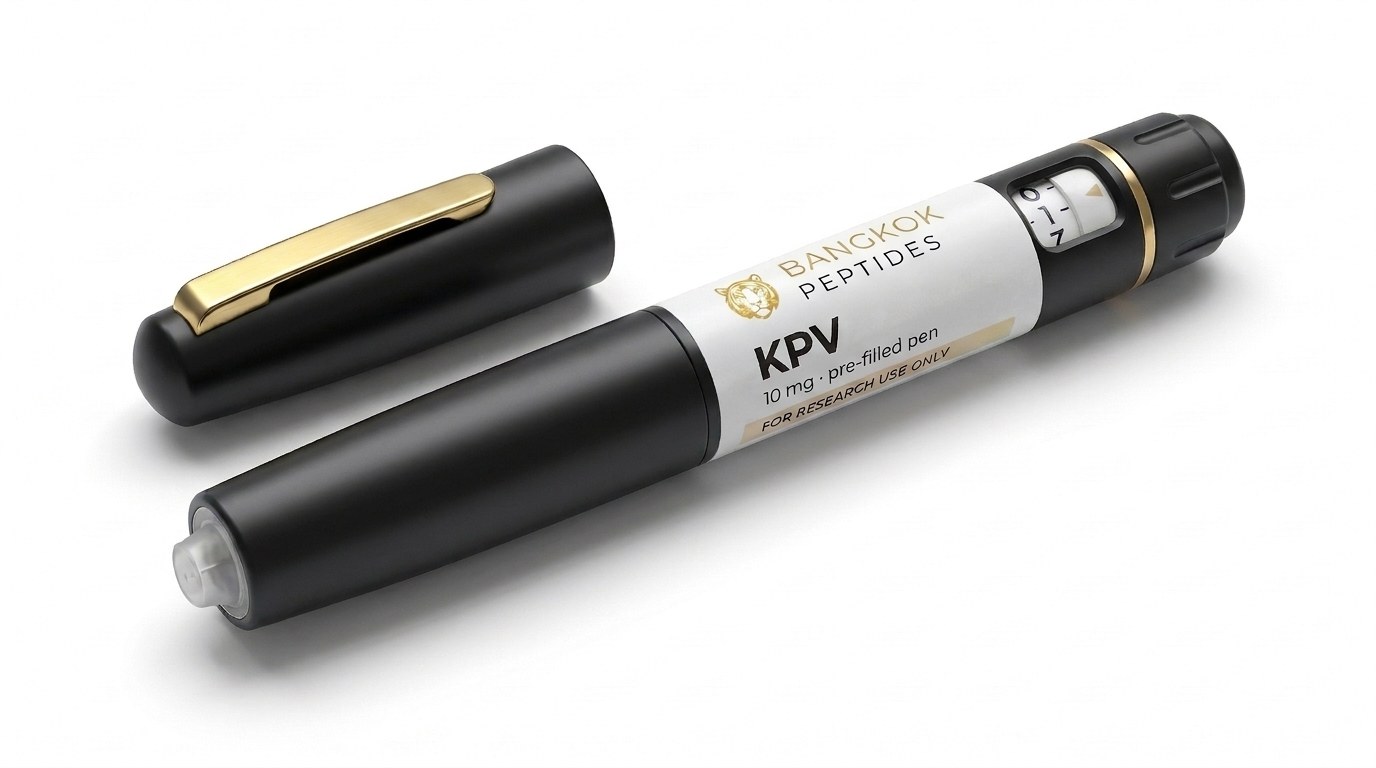
KPV 10mg Pen is a pre-filled catalogue presentation. FDA's July 2026 briefing, by comparison, evaluated proposed topical cream and gel uses for wound healing and inflammatory conditions. The proposed uses identify the assessment's scope; they do not establish a treatment effect for this pen. FDA KPV assessment.
FDA identifies KPV as lysine-proline-valine, a three-amino-acid peptide. Knowing that definition helps match the research name, but it does not erase the difference between a topical product proposed for evaluation and a separately named supplier presentation. FDA KPV assessment.
PepT1 uptake research
A 2008 paper investigated human intestinal epithelial cell lines and Jurkat T cells in laboratory experiments. It found KPV uptake through the PepT1 transporter in intestinal epithelial and immune cells. The finding addresses uptake in those experimental systems. It is not a demonstration of how a supplier pen performs in people. KPV intestinal-cell and mouse study.
The same paper included chemically induced colitis in mice. That adds an animal disease model to the cell work, not a human pen trial. KPV intestinal-cell and mouse study.
KPV pen versus vial and topical products
The topical evaluation concerns proposed creams and gels. The laboratory uptake work concerns named epithelial and immune cells. The colitis work concerns mice. These settings answer different experimental questions and cannot collectively establish clinical efficacy for a product merely because it is labeled KPV. FDA KPV assessment, KPV intestinal-cell and mouse study.
The KPV 10MG vial is the closest catalogue comparison for the pen's name and 10mg amount. The amount is a presentation field, rather than a concentration, a component of a preparation method or a clinical instruction.