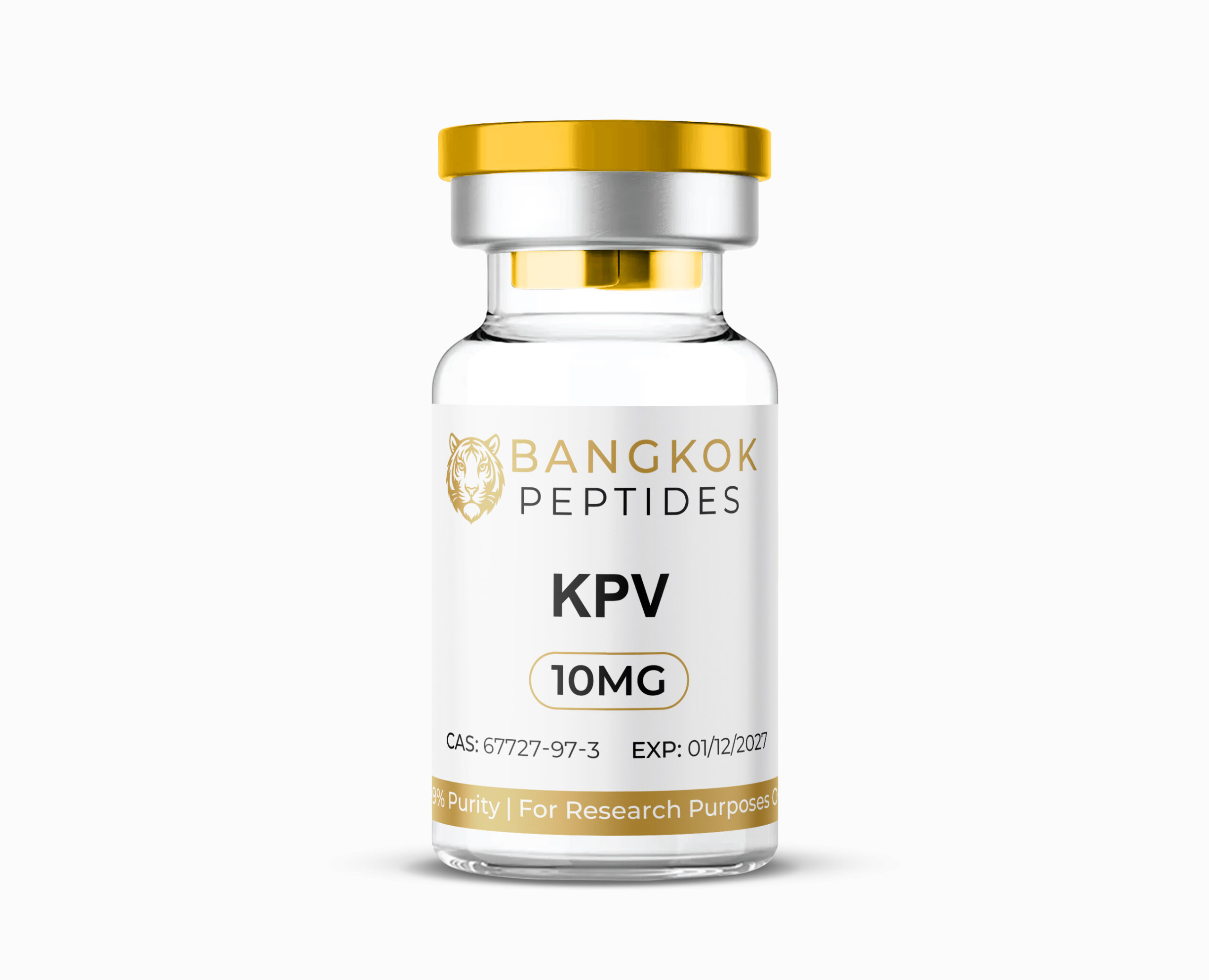
What is KPV?
KPV is a three-amino-acid peptide made up of lysine, proline and valine in FDA's description. The KPV 10MG vial name attaches a catalogue amount to that research topic. The three-residue definition identifies the evaluated peptide; it does not verify the contents of this supplier vial. FDA KPV assessment.
There are two distinct evidence settings worth separating: intestinal laboratory research and FDA's assessment of proposed topical products. They involve the same peptide name, but they do not test the same formulation or reader question. KPV intestinal-cell and mouse study, FDA KPV assessment.
PepT1 uptake in intestinal research
The 2008 KPV paper used human intestinal epithelial cell lines and Jurkat T cells in laboratory experiments. It found uptake through the PepT1 transporter in intestinal epithelial and immune cells. These are specific cell-system findings, rather than a clinical result in patients. KPV intestinal-cell and mouse study.
The paper also studied chemically induced colitis in mice. The cell experiments and mouse disease model provide different levels of experimental context: one concerns uptake in the named cell systems, while the other concerns an induced intestinal model in animals. Neither identifies this catalogue vial as a tested treatment. KPV intestinal-cell and mouse study.
The topical KPV assessment
FDA's July 2026 KPV briefing evaluated proposed topical cream and gel uses for wound healing and inflammatory conditions. Proposed uses describe what the assessment considered; they are not established benefits of the 10MG vial. A topical cream or gel is also distinct from the experimental intestinal settings. FDA KPV assessment.
The evidence concerns PepT1 uptake in cells, chemically induced colitis in mice, and proposed topical uses in the FDA evaluation. These cannot be combined into a single statement that the supplier vial treats inflammation. KPV intestinal-cell and mouse study, FDA KPV assessment.
The separately listed KPV 10mg Pen has its own presentation identity. Its shared KPV name does not make the pen, vial, topical nominations and intestinal experiments equivalent. FDA KPV assessment, KPV intestinal-cell and mouse study.