Melanotan II side effects and serious-event reports
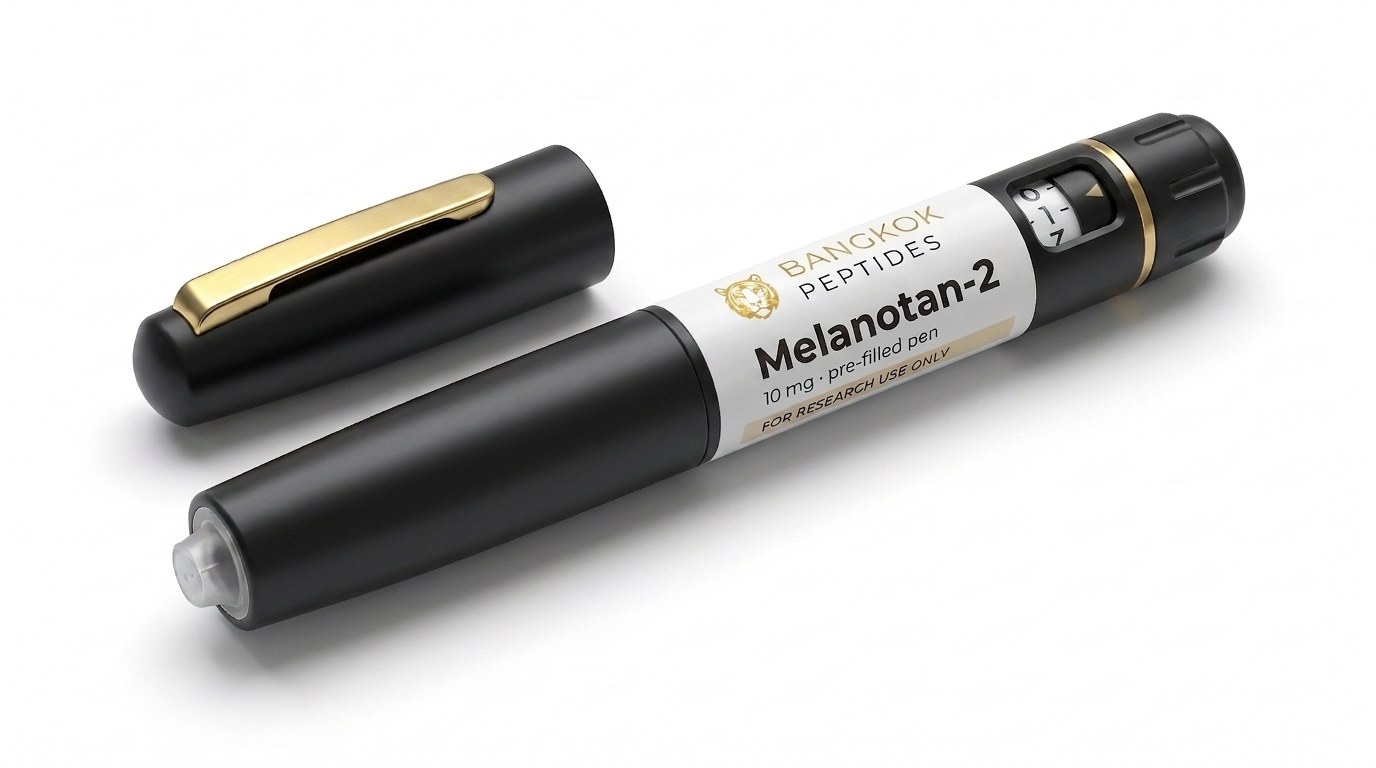
For Melanotan 2 (MT2) 10mg Pen, FDA's compounding safety discussion is an important source of context. Its Melanotan II entry cites serious-event case reports including priapism and posterior reversible encephalopathy syndrome. These are reports cited by the agency, rather than a measured adverse-event rate for this pen. FDA compounding safety communication.
The distinction prevents two overstatements. The reports should not be dismissed simply because they are case reports, but they also do not prove that a named supplier pen caused an event. Their supported role here is to identify the specific serious events in the FDA safety discussion. FDA compounding safety communication.
The three-volunteer pilot study
The 1996 single-blind, placebo-controlled pilot included three male volunteers. It assessed pigmentation with quantitative reflectance and visual assessment, and reported mild nausea. Melanotan II pilot study.
A pigmentation assessment in three volunteers does not establish a broad safety profile for a supplier product. Equally, the mild-nausea finding should not replace the separate serious-event reports cited by FDA. Melanotan II pilot study, FDA compounding safety communication.
Melanotan 2 pen quality and formulation
FDA identifies aggregation and peptide-related impurities as potential immune-response concerns for compounded Melanotan II. Those concerns concern compounded material, not a test result for the supplier pen. Its name and 10mg catalogue amount do not demonstrate formulation, purity or equivalence to the pilot material. FDA compounding safety communication.
The Melanotan 2 (MT2) 10MG vial is documented separately. Its matching topic name offers a format comparison, while the pilot findings and FDA safety reports remain evidence about their defined research and compounding contexts. Melanotan II pilot study, FDA compounding safety communication.