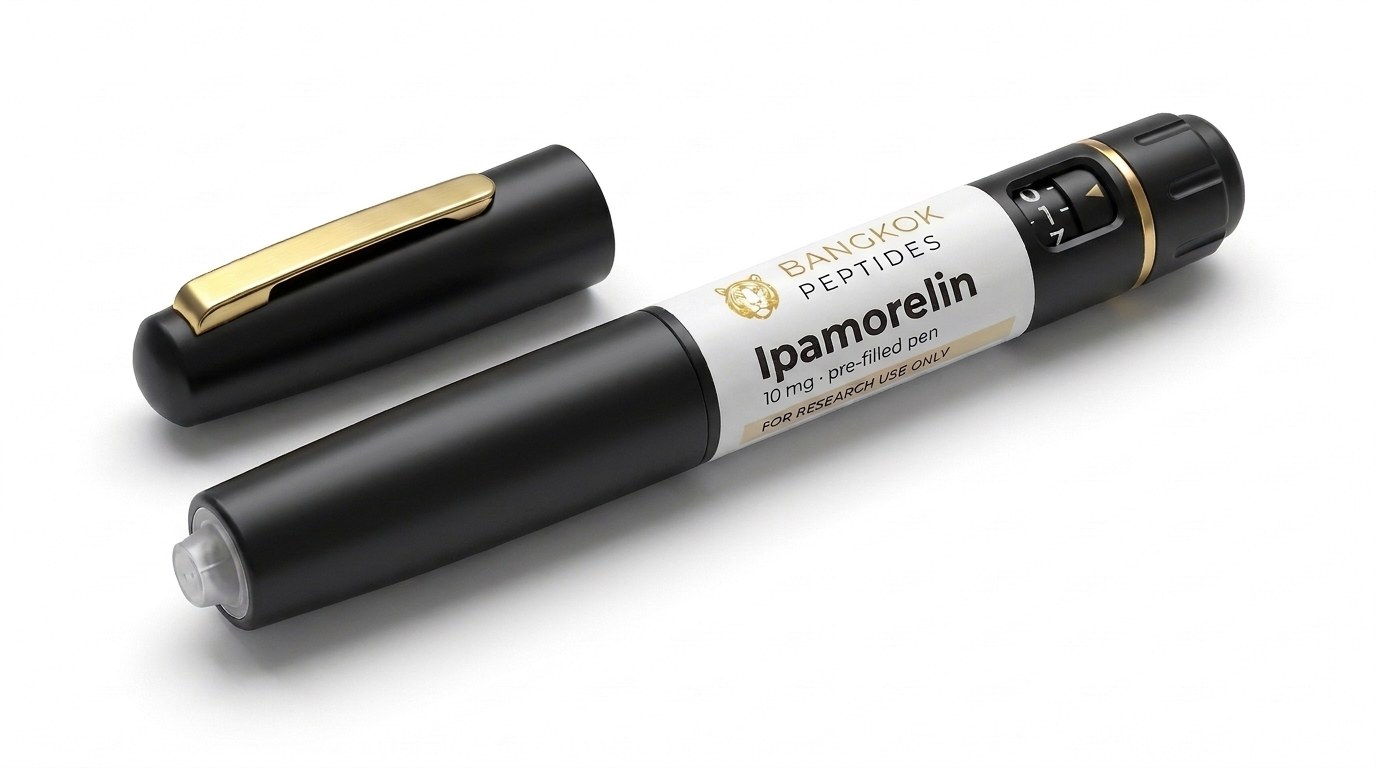
Ipamorelin postoperative trial results
The cited human ipamorelin research examined postoperative recovery, not the supplier's Ipamorelin 10mg Pen. In 2014, a multicentre, double-blind, placebo-controlled phase 2 trial studied adults undergoing bowel resection. Its key efficacy endpoint was time to tolerance of a standardized solid meal, not a measure of the listed pen's performance. Ipamorelin postoperative trial.
The trial found no significant differences from placebo in its key or secondary efficacy analyses. Ipamorelin postoperative trial.
Trial population and route
The population was adults undergoing bowel resection, and the endpoint concerned tolerance of a solid meal. They do not establish effects in a different population or validate a supplier pen carrying the same substance name. Ipamorelin postoperative trial.
FDA's safety discussion adds the route boundary: it distinguishes intravenous ipamorelin gastric-motility research from other injectable routes for which it had not identified safety information. A pen presentation does not, by itself, establish a bridge from that research context to another formulation or route. FDA compounding safety communication.
Ipamorelin acetate and pen identity
The FDA communication concerns ipamorelin acetate and identifies unnatural amino acids as an additional characterization challenge. The catalogue's Ipamorelin 10mg Pen name does not independently confirm that salt form. The 10mg amount belongs to the presentation, rather than being a concentration or an administration instruction. FDA compounding safety communication.
The separately documented ipamorelin vial gives a useful name-and-amount comparison. For the research topic beyond the two presentations, see the ipamorelin guide. Neither comparison supplies a successful result missing from the postoperative trial. Ipamorelin postoperative trial.