Telomerase and telomere cell findings
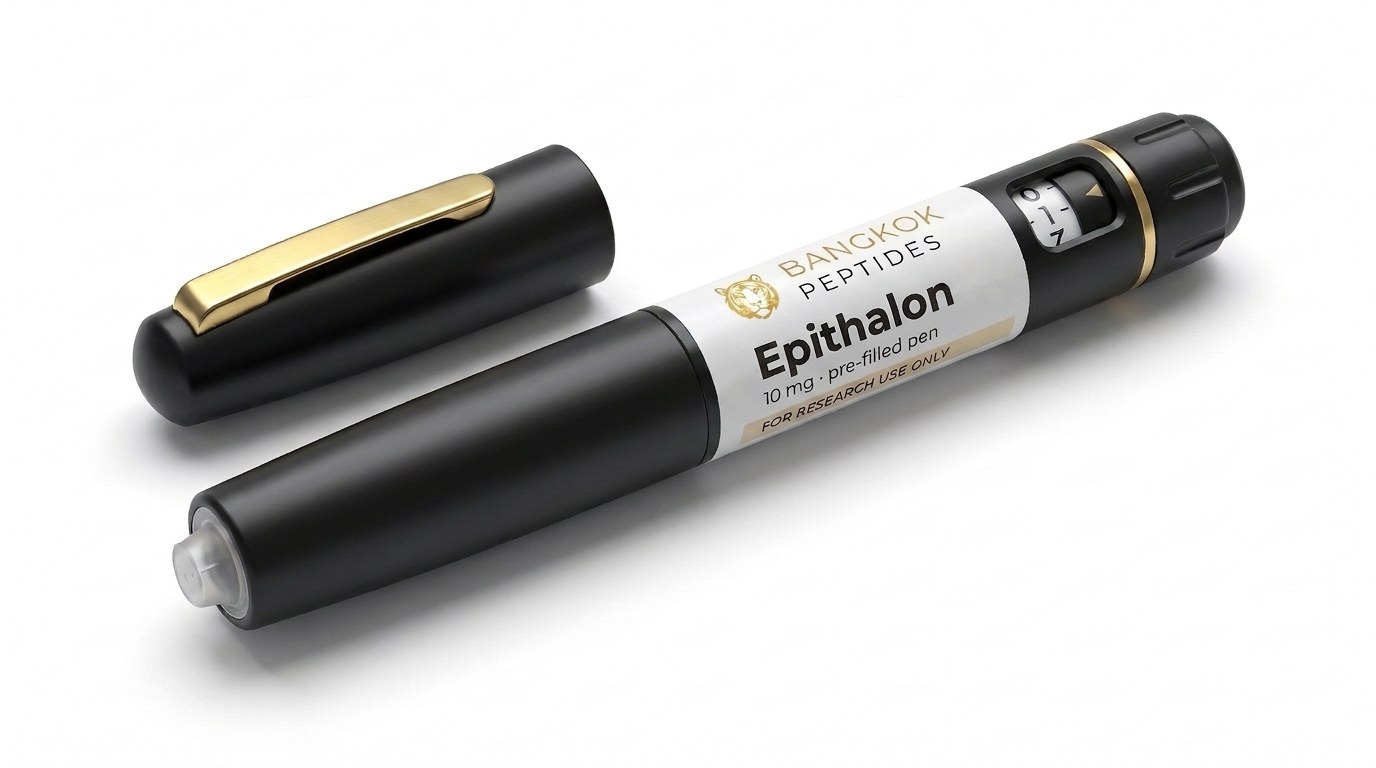
The Epithalon Pen listing has 10mg / 50mg variants. The cited 2003 study was a cell-culture experiment. It used telomerase-negative human fetal fibroblast cultures and reported telomerase activity and telomere elongation after exposure. These were cell-culture findings, rather than measurements of human lifespan or a clinical evaluation of this pen. Epithalon cell-culture study.
Epitalon identity and safety concerns
FDA's Substance Registry treats Epithalon as a synonym of Epitalon. In its July 2026 briefing, FDA describes epitalon free base as a synthetic four-amino-acid peptide. These records clarify the spelling and evaluated substance, rather than establishing the formulation inside the pen. FDA Epitalon terminology record, FDA epitalon assessment.
The pen listing shows 10mg / 50mg variants, which are presentation amounts rather than a concentration or use instruction. FDA's separate compounding safety communication identifies aggregation, peptide impurities and potential immune-response concerns for epitalon. Neither the mass nor the synonym record resolves those material-related questions for a supplier item. FDA compounding safety communication, FDA Epitalon terminology record.
The separately documented Epithalon vial also lists 10mg / 50mg variants. A matching amount field does not authenticate the contents of either presentation.